Thank you to all who participated in the 2025 Nîpiy Tu Research and Knowledge Centre Fish Camp.
September 30, 2025
This year’s camp was held out in the Peace Athabasca Delta from September 08 - 12th, 2025.
NTRKC is proud to once again have the full support of their founding member Nations; Athabasca Chipewyan First Nation, Mikisew Cree First Nation and Fort Chipewyan Métis Nation. Special thanks to the Mikisew CBM for hosting!
Fish camp is an event that brings together Elders, youth, fishermen and fisherwomen, land users, community-based monitoring staff, leadership, scientists, visitors from other First Nations and Métis Nations, as well as cultural programmers, teachers and media. Together they support the braided research and monitoring required to understand changes to the PAD and how this impacts the health of their fish.
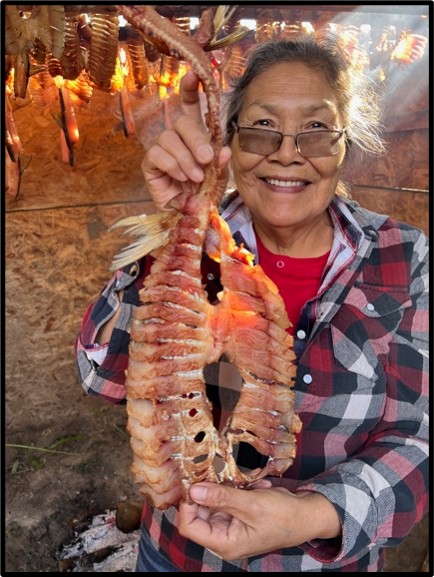
This year we sampled 165 fish total: 136 Walleye/Pickerel, 19 Goldeye, 10 Northern Pike/Jackfish. We also caught and made over 100 dryfish (lake whitefish).
Results from previous years were presented at camp. Highlights below:
Are the fish safe to eat?
Community specific limits have been developed to compare fish tissue against (not just Health Canada, Alberta or World Health Organization). Wild fish are an excellent source of protein. These limits help us understand the risk of consuming different foods and drink to our health.
CBM sampling for contaminants (mercury, metals, organics) shows whitefish are safe to eat.
2023 and 2024 data from fish camp for mercury in pickerel/walleye was compared to 2018 to 19 data. The majority of pickerel are safe to eat. Bigger and older fish (longer than 17 inches) have accumulated more mercury over their life time and have more than younger and smaller fish. This is expected given that they have a different diet to whitefish. If targeting pickerel, consider changing mesh size to target smaller pickerel or eat less often.
All the other contaminants (metals and organics) in pickerel were not of concern.
What can we tell by looking at the fish?
· Dry fish makers and fishers can tell us a lot about the health of fish by how they feel and what they look like inside and out.
· Taking measurements and samples give more information about the health of the fish and the risks to people eating the fish.
· Both sources of information give a more complete picture offish health in the PAD.
Eg. Flesh firmness: Elders noticed more whitefish with soft flesh. Indeed, we found fish sampled with soft flesh grew faster than more firm fish. Now we have to ask, “Why are some fish growing faster”?
.png)
%20(2).jpg)


.jpg)
.jpg)


